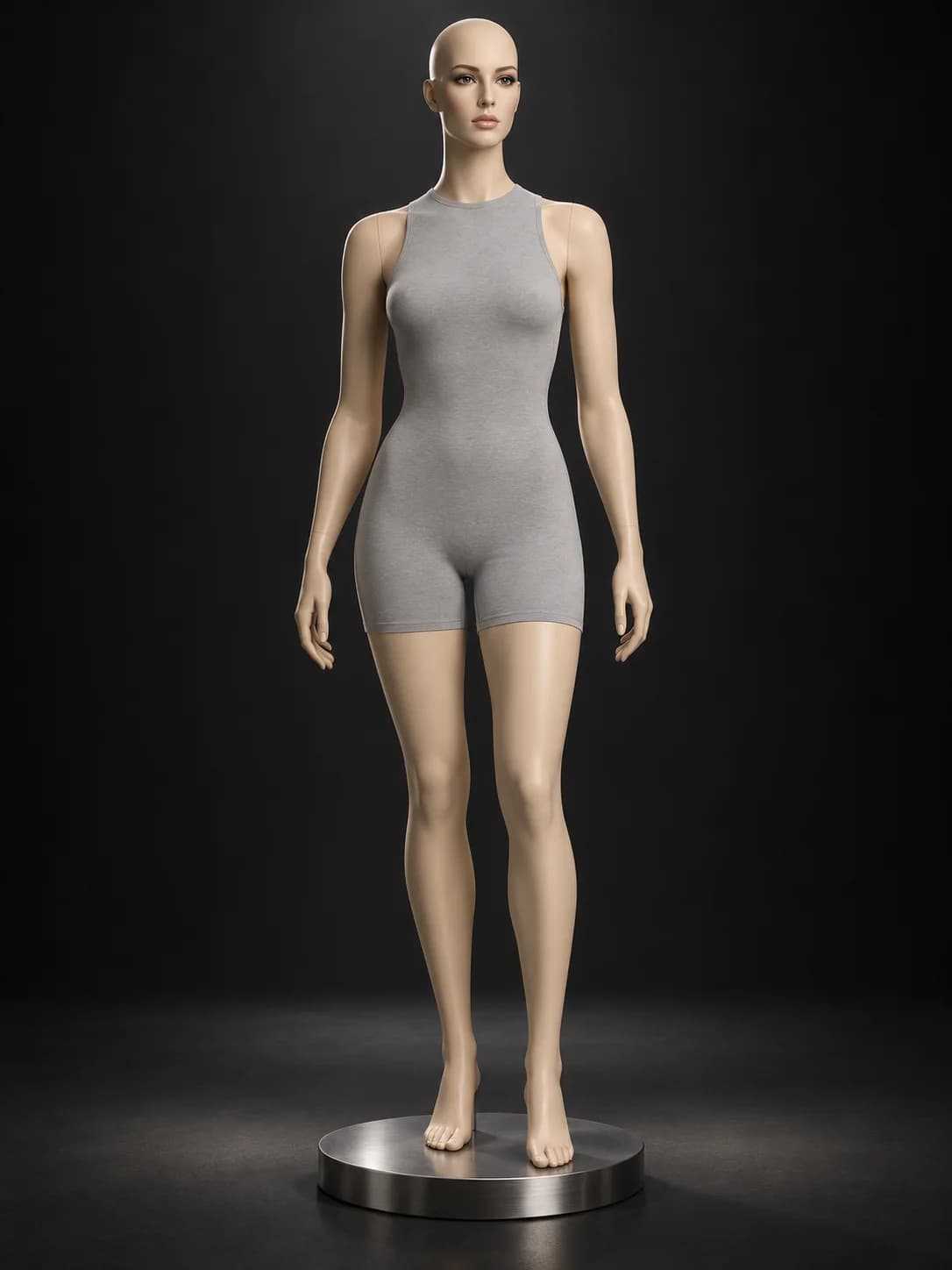
You shouldn’t have to picture every outfit on someone else’s body. We’re developing a mannequin you can configure around your measurements, with a way to begin without personal photos.
The personal wardrobe experience is in development. You can explore our sample wardrobe today; joining the list is free and does not start a subscription.
DIGITAL ME / CONCEPT ARTWORK✳
Concept, not a finished fitting result
Your measurements lead. A preset only gets you started.
A baseline can help you begin, but your entered dimensions and preferred proportions need to take over. A size label alone cannot describe you.
Height and individual body segments
Chest, waist, hips and preferred ease
Front, side and back review
YOUR PERSONAL FORM, WITH HONEST LIMITS
Make the proportions personal. Keep the evidence visible.
Your height alone cannot describe your body. Two people of the same height can have different torso lengths, shoulders, hips and preferences for ease. Digital Me is our independently developed approach to a configurable personal mannequin; the artwork on this page is a concept, not a working scan or validated fitting result.
The planned setup uses a body-form baseline and starting size to reduce the first steps. Those choices are estimates, not measurements. You would then adjust the dimensions you know, including torso, limb lengths and circumferences. A size label cannot establish your posture or exact proportions.
An estimated field must remain distinguishable from a measurement you supplied.
02
Review the whole form, not just the front
A credible mannequin needs coherent shoulders, bust, waist, pelvis, hands and legs from the front, side, back and three-quarter views. Changing one dimension should preserve believable transitions. We have not completed the visual and physical validation needed to promise an exact digital copy of you.
A beautiful front view does not prove a reliable three-dimensional model.
03
Keep visual try-on separate from physical fit
Placing a garment image on a body can help you explore colour and silhouette. Predicting tightness, length or drape also needs garment dimensions, construction and material behaviour. When those details are missing, the preview must say so rather than imply that the clothes are guaranteed to fit.
A visual idea and a tested fit result are different kinds of evidence.
THE DETAILS, MADE CONCRETE
What would make a preview trustworthy?
A product standard we are building toward, not a claim that the public illustration already meets it.
What would make a preview trustworthy?
Information
What it can help with
What it cannot establish alone
Your confirmed measurements
Personal body proportions
A garment’s stretch or ease
Garment dimensions and construction
Length and space comparisons
Every effect of movement or fabric drape
A colour or silhouette preview
Visual exploration
Physical comfort or guaranteed size
Your feedback after wearing
Real fit experience
How every other garment will behave
↳You should be able to begin from measurements without personal photographs. Optional personal-photo processing must remain local under our product design; this site does not collect those photos.
BEFORE YOU TAKE THE NEXT STEP
A little more clarity.
Practical answers, including what is still being built.
Is the mannequin shown here the working 3D engine?+
No. It is concept artwork. Our independently authored 3D engine is still in development and has not been validated as an exact body reconstruction or garment-fitting system.
Will selecting female, male or a size give me my exact body?+
No. A baseline can help start the shape, but individual measurements and adjustments still matter. We must validate the resulting geometry instead of presenting a category as an exact description of a person.
Can I use Digital Me on this website today?+
No. You can understand the design here and explore the sample wardrobe separately. We will only present a personal mannequin or fit feature as available when the working capability and its limits can be demonstrated.